The Submissive's Reading List: What's Worth Your Time, From the Dom Who's Read It All
Most reading lists for submissives are written by submissives: peer recommendations, passed like notes. These books were read from the other chair. Here is what shaped how I understand power, and what I think they will do for you.
 By Sir Linus From the June 2026 issue 9 min read

I read them all before I asked anyone else to. That felt like the right order, not because I needed permission to dominate, but because a dominant who hasn’t done the reading is a person asking for your trust while carrying secondhand assumptions. Every book on this list shaped something in how I understand what happens between two people in a power exchange. Some of them I read because I was curious. Some I read because a woman I was responsible for handed them to me, quietly, as a test.
What makes a reading list from the dominant’s chair different is exactly this: I was not reading to learn how to submit. I was reading to understand what you are experiencing from inside an arrangement I am steering. That is a different kind of attention, and it is why, for some of these titles, my annotation will look different from every other recommendation you have encountered.
Book links on this page are affiliate links; see the affiliate disclosure. It costs you nothing and keeps the publication free.
What to take from this
- The most important books for submissives are not always the ones written to submissives. Some of the most protective reading you can do is in the titles written for dominants.
- No single book on this list is complete. Each has a blind spot, and naming those blind spots is part of the work. A reading list that pretends otherwise is selling you something.
- Reading across the literature (beyond the beginner titles, and beyond "your side") is how you build the kind of discernment that protects you in real dynamics with real people.
Where to start: the essential books for submissives
The first two titles are the ones I would hand to any woman at the beginning. They establish the vocabulary, the safety architecture, and (in the case of the first) the specific interior experience of being on your side of a power exchange. Everything else on this list builds on a foundation these two lay.
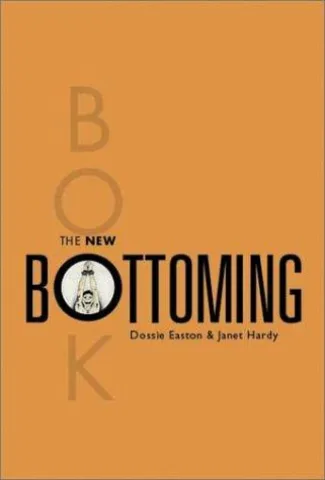 The New Bottoming Book by Dossie Easton & Janet W. Hardy
This is the book for your side. Easton and Hardy write with the kind of practical warmth that is rare in this genre; they take the bottom’s experience seriously as an interior event rather than a choreography of response. What it does especially well is give language to the psychological texture of surrender: what it actually means to give over control, how that is different from passivity, and what a bottom needs to be able to hold her own safety while doing it. The honest caveat: the book’s framing tilts heavily toward scene-based BDSM; the more continuous D/s arrangements some of you live in get less direct attention. Read it anyway. The foundational material is irreplaceable.
 SM 101: A Realistic Introduction by Jay Wiseman
The safety classic. Wiseman’s risk chapters remain the most honest and useful in the literature; he does not pretend that certain activities are safe when they are not, and he explains the physiology in enough detail that you understand the why behind the what. The book has aged in places, particularly in its gender framing and its assumption of a specific het-cis dynamic. Read past that. The medical and physical risk material earns its place regardless, and a submissive who has read it is materially safer than one who hasn’t. I would rather you find it dated in tone and current in judgment than the reverse.
The craft: technique, breadth, and the skill that matters most
This group covers the practical range of BDSM (the activities, the styles, the scene-craft) plus the one skill that, in my experience, determines more than anything else whether a dynamic holds up over time.
Screw the Roses, Send Me the Thorns by Philip Miller & Molly Devon
The playful classic. Miller and Devon’s tone is lighter than the Easton/Hardy titles (dryer, more wry), and their coverage of scene-craft and equipment is genuinely thorough. The photography dates it visually (it is very 1990s) but the practical content survives. What I found most useful reading it from my chair was how clearly it illustrated the preparation and intention a dominant brings to a scene: not as improvisation but as craft. Understanding that preparation from your side is useful: it raises your standard for what you should expect from someone who claims to know what they are doing.
 The Ultimate Guide to Kink edited by Tristan Taormino
An essay collection rather than a unified manual, which is both its strength and its limitation. The breadth is genuine; Taormino assembled writers who specialize, and the specialist chapters on their respective activities are frequently the best short writing on those topics anywhere. What the format sacrifices is coherence: it reads as an anthology, not a curriculum. Use it as a reference and for the essays that speak to your specific interests. Do not expect it to build a framework the way Easton/Hardy does.
Tongue Tied by Stella Harris
The most underrated title on this list. Harris writes specifically about communication and negotiation in kink, which sounds dry and is the opposite. The skill she teaches is the one I have watched more dynamics fail for lack of than any other: the ability to say precisely what you want, what you don’t want, and what is happening for you in real time, to a person you have handed authority to. The structural difficulty there is obvious: negotiating with someone you’ve given power over you requires a specific kind of clarity. Harris teaches it without making you feel that wanting to submit is itself the problem. Read this one before you are deep in a dynamic, not after.
His side: read it anyway
This is the group that will feel counterintuitive, and it is the group I would argue hardest for. Reading the books written for dominants is the most effective vetting tool available to you. A dominant who hasn’t thought through the responsibilities named in these books is a person you will recognize, after you have read them, before the dynamic gets difficult.
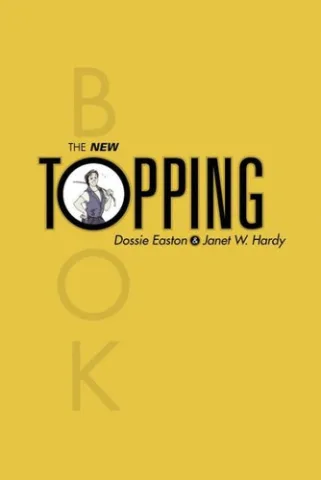 The New Topping Book by Dossie Easton & Janet W. Hardy
Read this because it is his manual. What a competent dominant is supposed to carry (the aftercare responsibility, the obligation to hold the container reliably, the emotional labor that scene-craft requires from the person in charge) is laid out clearly here. When you know what competent looks like from the other side, you can notice its absence. That is not a small thing. The book is also honest about the top’s interior experience in ways that may make your dominant’s behavior more legible to you: why he needs debrief, what a scene costs him, what he is tracking while you are not tracking anything at all.
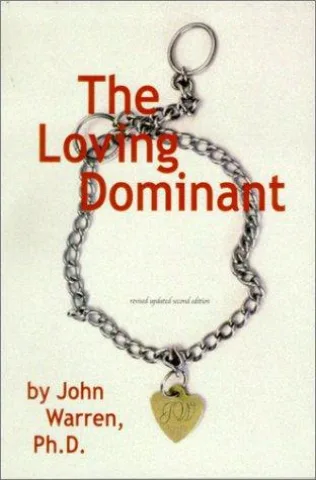 The Loving Dominant by John & Libby Warren
Older, occasionally clunky; the gender framing is firmly of its era, and the assumptions about relationship structure feel dated in places. Still one of the few serious books written from and to the dominant perspective, which makes it worth reading for the same reason as the Topping Book: you want to know what a thoughtful dominant in a long-term dynamic is supposed to be thinking about. The chapter on the dominant’s responsibilities to a submissive’s growth (not her service alone) is the one I found most worth the price of admission. The caveat is real: read it as a historical document in parts, and weight the material that has aged well against the material that hasn’t.
The mind underneath
These three titles are not BDSM books in the conventional sense. Two are adjacent; one is squarely mainstream psychology. All three shaped how I understand desire, community, and the practical ethics of sharing yourself with another person. I recommend them precisely because they are not of the genre; they bring a different kind of clarity.
 Come As You Are by Emily Nagoski
Mainstream, grounded in peer-reviewed desire research, and almost certainly the book that will explain your own arousal to you more clearly than any kink-specific title on this list. Nagoski’s dual-control model (the accelerator and the brake) is genuinely useful for understanding why you respond the way you do in a dynamic, and why that response sometimes stops making sense to you. Knowing yourself as a submissive requires knowing how your desire actually works, not how you think it should work. This book does that. It is also completely accessible to anyone in your life if you want to point someone toward it; the lack of kink-specific framing is a feature, not a gap.
Playing Well with Others by Lee Harrington & Mollena Williams
Community, etiquette, and the social architecture of kink: the book covers how to navigate events, find your people, and build the relationships around a dynamic, not only the dynamic itself. Harrington and Williams write from positions of genuine community experience, and the book carries the weight of that. If you are isolated in your practice (no local community, no people who know this part of you), this title gives you a map of what community could look like and how to enter it without walking into avoidable situations with your eyes closed.
 The Ethical Slut by Dossie Easton & Janet W. Hardy
The negotiation and jealousy toolkit of the polyamory literature, with the honest caveat that it is not D/s-specific and will not address the specific complications of navigating jealousy, consent, and structural agreements inside a power-exchange dynamic. What it does address, clearly and without moralizing, is how to have honest conversations about what you want, what you’re afraid of, and what the terms of your arrangement actually are. That conversation is as necessary in a D/s relationship as in any other, and Easton and Hardy are unusually good at teaching it. Read it for the negotiation mechanics; translate them yourself to the context you are actually in.
What the list is not
No reading list finishes the work. These ten titles will give you a vocabulary, a framework, and a set of comparisons for what thoughtful practice looks like, but they will not substitute for the actual, difficult, ongoing conversation that a good dynamic requires. I have seen women arrive at a relationship with all of these read and still walk into danger, because the danger lived in the space between the books: in the specific person in front of them, and in the willingness to say what they saw clearly.
Use the reading as exactly what it is: preparation for discernment. The day-collar decisions you make, the limits you set and hold, the dominants you choose or decline: those happen in the room, not on the page. But the person who made the reading is better equipped for all of it.
It is not ridiculous at all; it is the entirely sensible response to living in a world that does not yet handle this subject with much grace. The practical answer is Kindle with household sharing turned off, or a private shelf you don’t have to explain to visitors. Most of these titles have covers that are either nondescript or clearly “sexuality/relationships” without being explicit; only one or two read unmistakably as BDSM to the uninitiated. The more important answer, though, is this: you are allowed to have a reading life that belongs to you. The books on this list are not shameful. They are thoughtful, some of them genuinely well-written, and all of them are treating the subject with more seriousness than the people who would judge you for owning them. Your reading is yours. No one is owed access to your library any more than they are owed access to your journal, and a Kindle screen locks just as easily as a door.
As an Amazon Associate, Submissive Path earns from qualifying purchases.